






.jpg.jpeg)

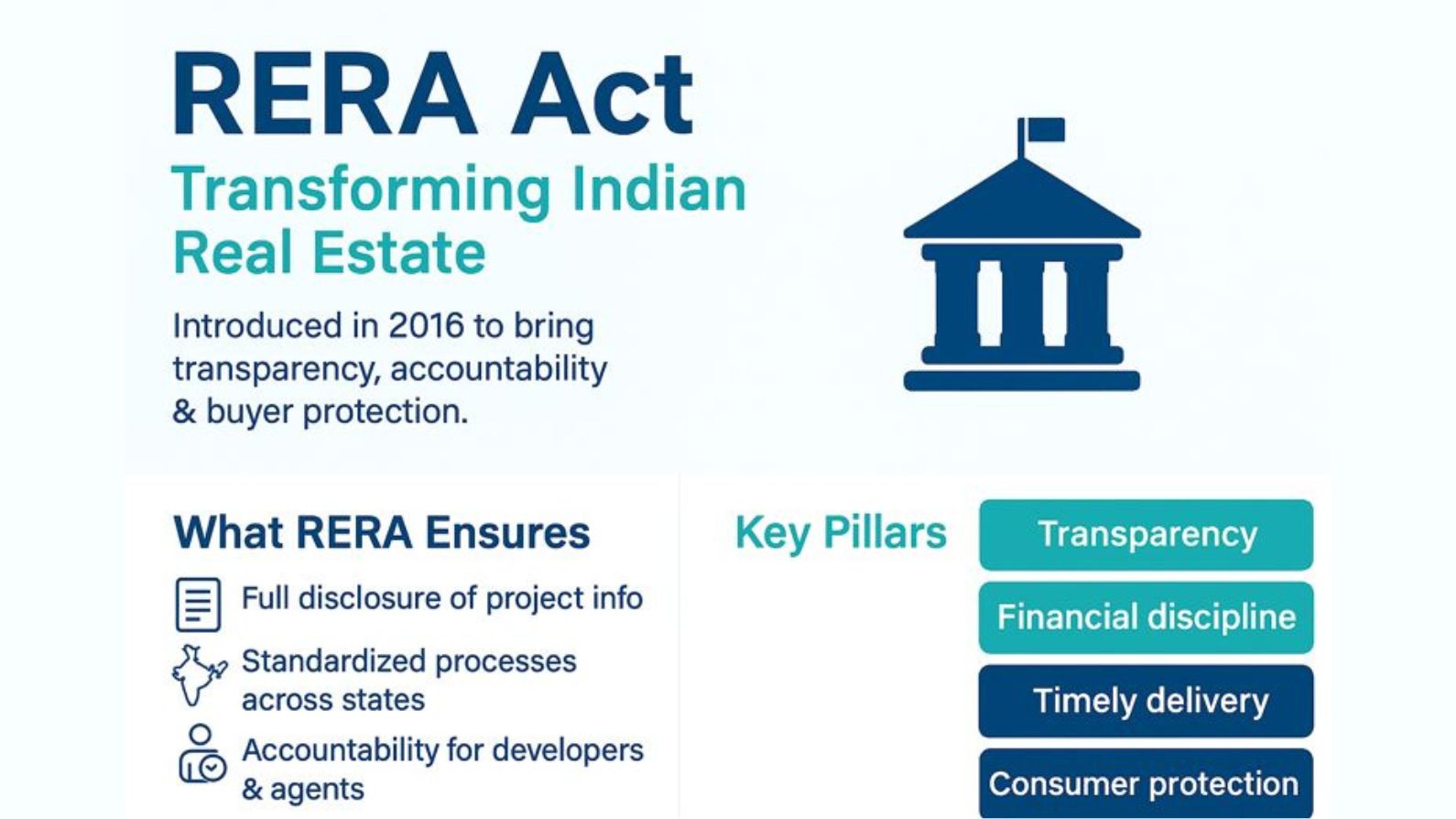
This article examines how the Real Estate Regulatory Authority Act has transformed the market and established a new benchmark for real estate transactions in India.
What Is the RERA Act?
The RERA Act was enacted in 2016, and it is a regulatory mechanism designed for the real estate industry. It aims at introducing efficiency, transparency, and financial discipline into a market that had developed at a high rate but in an uneven manner
At its core, the Act ensures-
● Full disclosure of project information.
● Standardized process across states.
● Developer and real estate agent accountability.
● An effective grievance redressal system.
Each state formed its own Real Estate Regulatory Authority that oversees the projects. It also ensures compliance and regulates registrations. These regulators give home buyers access to verified information and a reliable platform through which they can raise concerns.
Key Features of the RERA Act
The strength of the Act lies in its powerful regulatory characteristics, and each of them is aimed at safeguarding consumer interests and creating uniformity in the industry.
Some of the most notable provisions are-
● Compulsory Registration- All the projects that are above the mentioned size must be registered on the state RERA portal.
● Accurate Disclosures- Developers are required to publish layout plans, project schedules, approvals, and project funding structures.
● Escrow Accounts- It should be deposited in a special account where seventy percent of the money collected from the buyers should be used, but not on any other project.
● Defined Timelines- According to RERA rules and regulations, delays invite penalties and compensation for buyers.
● Fair Contract Terms- Clauses related to possession date, payment schemes, and quality of the construction are standardized.
The features ensure that the projects operate in a more financially disciplined way and reduce the chances of diversion or mismanagement.
RERA Authority: Roles & Responsibilities
RERA Authority in every state serves as the backbone of the Act. Its mandate extends way beyond registration to include strategic management and governance in the sector.
Some of the key responsibilities are-
● Checking project applications and granting registrations.
● Reviewing reports provided by the developers.
● Enforcing RERA real estate regulations.
● Dealing with buyer complaints and conflicts.
● Introducing fines for failure to comply.
● Keeping an open digital public database.
The Authority facilitates a well-organized real estate environment through these rules. It helps maintain professional standards and ensures consumer interests are protected.
What Does RERA-Approved Mean
When a project is termed RERA approved, it implies that the project complies with all statutory requirements as provided in the Act.
The verified data that can be found in RERA-registered projects include-
● Land ownership details.
● Government approvals.
● Accurate quarterly construction updates.
● Financial disclosures.
● Final delivery timelines.
RERA approval is a ray of hope to the homebuyers. It also assists in alleviating risks involved in misleading advertisements or unproven claims of projects. A registered project guarantees adherence to guidelines.
Benefits of RERA for Buyers, Developers & Agents
The Act brings equal benefits to all the stakeholders in the real estate chain.
For Homebuyers
● Open visibility of project information.
● Guarantee against construction delays.
● Current standardized contracts and fair terms.
● Strong grievance redressal.
This has raised the level of confidence in the real estate sector tremendously, as there is now RERA as a guarantee to the homebuyers.
For Developers
● Greater compliance leads to better credibility.
● Clear regulatory processes.
● More effectiveness in the plan and implementation.
● A more competitive environment.
Developers who do not break the rules are more trusted and have an easier experience getting the project approved.
For Real Estate Agents
● Well outlined registration regulations.
● Ethical sales practices.
● Enhanced professionalism.
● Reduced misinformation.
The agents have to follow the RERA laws to achieve responsible communication and reduce conflicts.
Real-Life Case Studies: How RERA Changed Indian Real Estate
Since its introduction, the Act has had a quantifiable effect on different cities and types of projects. There are multiple examples that show how the regulatory structure changed the results for both buyers and developers.
Many stalled or delayed projects in metropolitan areas moved forward after the intervention of authorities imposing corrective measures. The power of the dispute-resolution system is also evidenced because buyers were compensated in instances where developers missed the deadlines promised.
Some cities, such as Pune, Bengaluru, and Mumbai, also registered higher and enhanced transparency. Project developers kept the project information updated, fixed structural problems promptly, and adjusted the timeline according to the regulatory review. These demonstrations underscore the importance of the RERA Act enforcement, which promotes a greater sense of discipline and enhances the industry.
RERA Compliance Requirements
Developers must meet a set of compliance requirements that have to be fulfilled before launching or advertising any project. Any form of deviation may attract penalties or disqualification.
The major compliance requirements are-
● Obtaining a project approval from the state authority.
● Posting authorized building plans and land documents.
● Creating quarterly project advancement reports.
● Maintaining escrow accounts as stated in the Act.
● Sticking to the deadlines as committed during registration.
● Strategizing approvals associated with modifications to structure, design, and other specifications.
These compliance standards make sure that the Real Estate Regulatory Authority Act encourages transparency during the initial phases of a project, as well as in the entire execution cycle of the project.
Conclusion
Since its inception in 2016, the RERA Act has introduced much-needed structure, fairness, and transparency to Indian real estate. It allows the homebuyers to make better choices as well as directs developers and agents into professional and standardized practices. The Act has been a transformative moment in the history of the Indian property market with its clear rules, stringent disclosure and well-established buyer protection. With the increasing compliance levels among the states, the industry is now heading towards increased levels of trust, efficiency, and accountability.