




.jpg.jpeg)

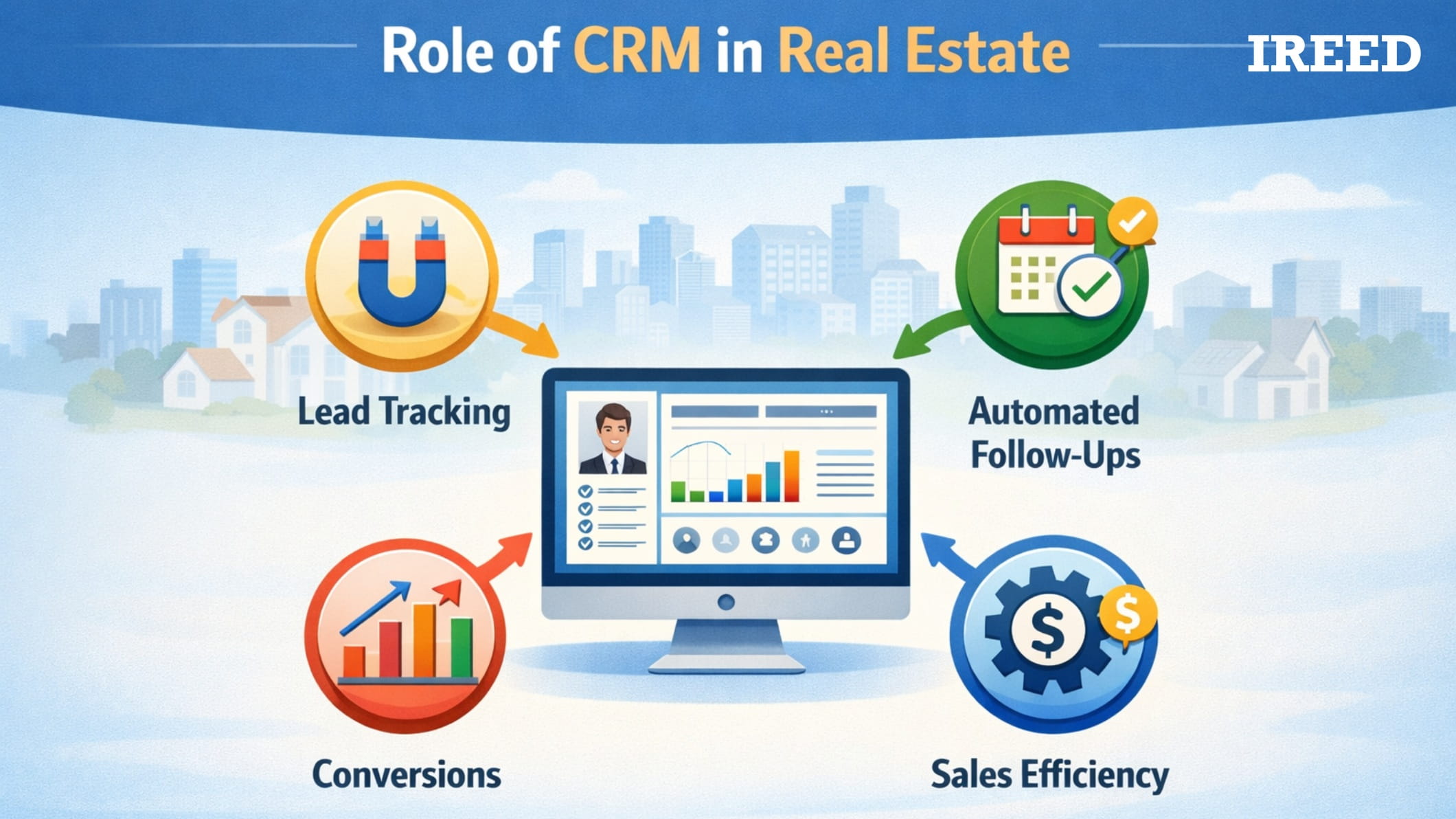
It is here that CRM (Customer Relationship Management) systems come in handy. A properly applied CRM does not just contain contacts; it forms the nervous system of real estate leads management.
Multiple Channels Centralised Lead Capture
There are numerous sources of real estate leads:
Property portals
Website forms
Social media ads
Walk-in inquiries
Channel partners
Referrals
All these leads are consolidated in a central platform via CRM that removes the fragmented spreadsheets, calls that are not answered and loss of data. Why it matters:The sales multiple are provided with a single and organised view of all the prospects so that no lead would go down the drain. Not all leads are equal. CRM systems assist in categorizing based on leads on: Budget range The type of property (plot, apartment, villa, commercial) Location preference Buyer intent (hot, warm, cold) Source of inquiry This enables the teams to focus on high-intent leads as a priority and tailor communication to them. Impact: Increased targeting = increased conversion rates + increased sales time. Poor follow-up is one of the causes of failure in real estate deals. CRMs automate: Follow-up reminders Email and WhatsApp messages Call scheduling Site visit confirmations Automation also means that messages are delivered on time without the use of memory and manual tracking. Result: The future customers do not feel neglected, and the salespeople remain stable and professional. CRM systems follow a lead throughout their path: First inquiry Initial contact Site visit Negotiation Booking Closure or drop-off The sales managers will have an immediate display of the status of each lead and can determine where the sales funnel is being choked. Why this is critical: You can fix what you can see. CRM introduces a sense of transparency into the sales process. In real estate, the leads can go through many hands inside sales, site visit teams, closing managers, and channel partners. CRM: Assigns leads clearly. Monitors the ownership of tracks and activities. Record meetings, calls and messages. Eliminates repetition or rivalry. Outcome: An improved accountability, improved handovers, and improved team coordination. CRM systems will give actionable insights, including: Rates of conversion by source of lead. Team member sales performance. Average closure time Drop-off stages Campaign ROI Managers do not have to guess and base decisions on data. Example: In case the leads through social media perform better than the ones through the portal, the budgets can be intelligently reallocated. The new consumers want no standardized sales calls that are standardised. CRM enables: Context-aware conversations Recommendations of personalised properties. Buyer preference-based follow-ups. Relationship nurturing on a long-term basis. Result: Clients do not feel sold but rather understood which develops trust and credibility. By combining: Timely follow-ups Lead prioritisation Process visibility Team accountability CRM systems also enhance greatly: Lead-to-site-visit ratios Site-visit-to-booking conversions Overall sales velocity Bottom line: CRM has a direct influence on revenue. Manual systems are not sustainable as the real estate company expands. CRM allows: Easy scaling of sales teams. Uniformity of operations in projects. Large-scale performance monitoring. Micromanagement is absent, but the major is in control. This renders CRM very necessary not only in sales, but also in long-term business development. Real estate is not a one-time transaction market. CRM helps with: Referral management Repeat sales Investor relationships Post-sales communication Future project launches A happy customer nowadays may be a customer tomorrow--or by a recommendation--and CRM is the key to holding on to that relationship. Lead management is the same as revenue management in contemporary real estate. A CRM system is a machine that turns mayhem into order, intuition into knowledge and work into outcomes. It enables: Better lead tracking Faster follow-ups Higher conversions Better customer experience. Scalable growth In the case of real estate professionals and organisations intending to remain competitive, CRM adoption is not merely a technological modification, but it is a strategic requirement.Categorisation and Segmentation of Leads
Fully Automated Follow-Ups & Reminders
Lifecycle Visibility (End-to-End Lead Tracking)
Better Co-ordination and Responsibility Among the Teams
Data-Driven Sales Decisions
Improved Customer Service & Personalisation
Increased Conversion Rates and Swift Closures
Read More: Top 5 Skills That Make You Stand Out in the Real Estate IndustryExpansion to Increase Real Estate Businesses
Long-Term Relationships: CRM Beyond Sales
Conclusion