




.jpg.jpeg)

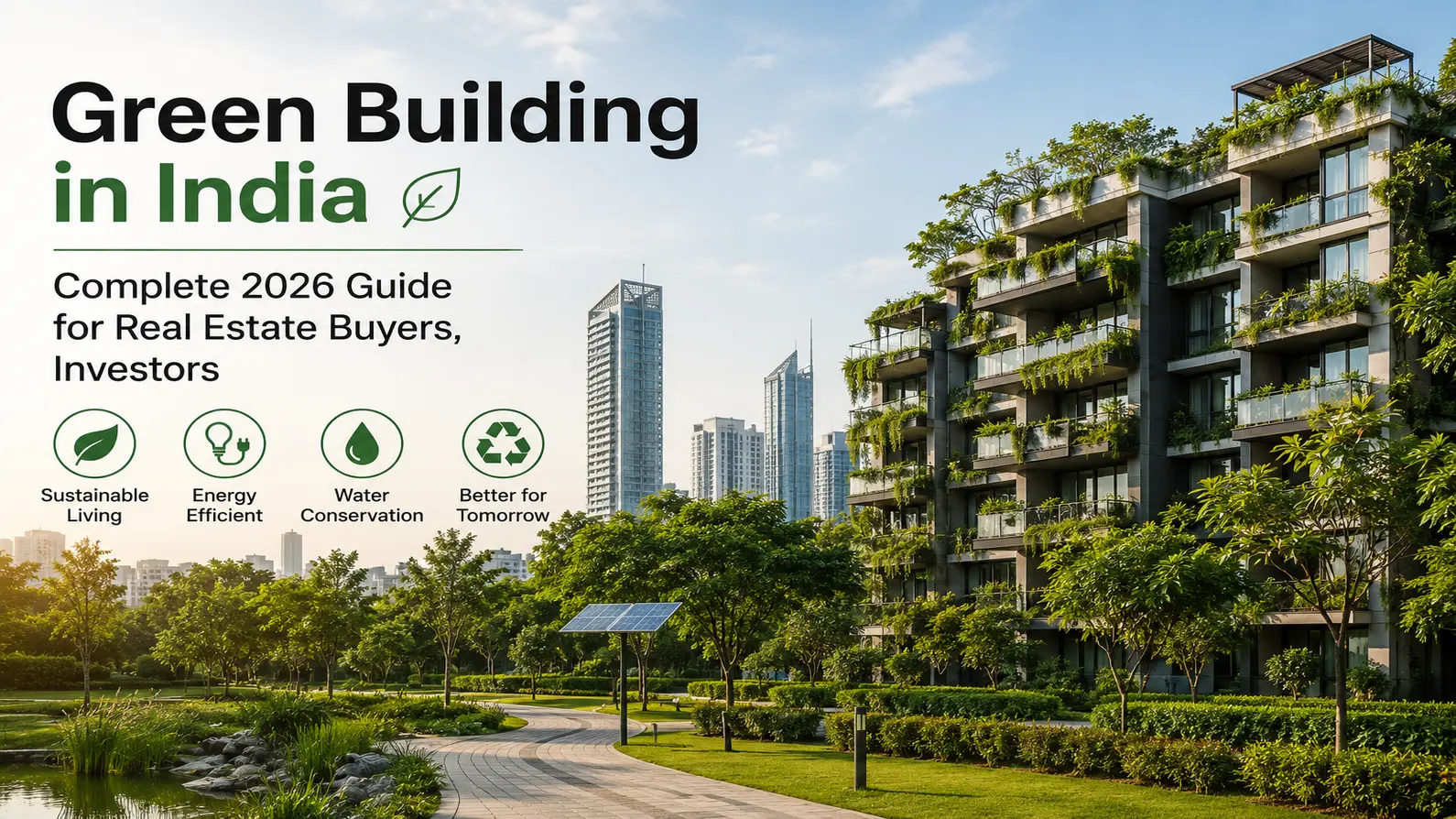
Green building in India is no longer a premium differentiator — it is rapidly becoming the industry standard. In 2026, 80–90% of new real estate supply is expected to carry green certification, pushing India's overall green penetration to 70–75% — a seismic shift from just 15% in 2015. Whether you are a homebuyer evaluating your next purchase, an investor calculating long-term returns, or a real estate professional advising clients, understanding green building in India is no longer optional — it is the new foundation of smart real estate decision-making. India is now the third largest green building market in the world by area — a fact that would have seemed impossible just a decade ago. Driven by IGBC certification, government mandates, rising energy costs, climate consciousness among premium buyers, and the proven financial benefits of green properties, sustainable real estate has moved from fringe to mainstream across every segment of India's property market. This complete 2026 guide covers what green building means, which certifications matter, the financial benefits for buyers and investors, and why green real estate expertise is one of the most valuable career skills in India's property sector today. #3 India — global green building market 80–90% New supply green certified 2026 10–15% Price premium for green homes 30–40% Energy savings in green buildings A green building is a structure designed, constructed, and operated to minimise its environmental impact while maximising resource efficiency — covering energy, water, materials, and indoor environment quality. In India, a green building is formally defined by certification under recognised rating systems like IGBC (Indian Green Building Council), GRIHA (Green Rating for Integrated Habitat Assessment), or LEED (Leadership in Energy and Environmental Design). Green buildings in India consume 30–40% less energy, use 40–50% less water, generate significantly less waste, and provide measurably healthier indoor environments than conventional construction. They achieve higher market resale values, command rental premiums, and consistently outperform non-certified properties on total return metrics over 5–10 year investment horizons. Key fact: Green certified homes provide long-term savings on utility costs and usually have a higher market resale value — making green buildings the superior financial choice for both buyers and investors in India's 2026 real estate market. Indian Green Building Council Most widely used in residential Platinum, Gold, Silver, Certified levels Covers energy, water, materials, IEQ 150M+ sq ft certified in India Green Rating for Integrated Habitat India's national green building rating Developed by TERI + Govt of India 1–5 star rating system Mandatory for govt buildings 500m²+ US Green Building Council standard Globally recognised — valued by MNCs Certified, Silver, Gold, Platinum Dominates commercial office segment Premium pricing commanded globally Bureau of Energy Efficiency Energy efficiency focus only 1–5 star rating for buildings Mandatory for large commercial buildings Increasingly common in residential too Green certified properties in India consistently command 10–15% higher resale values than comparable non-certified buildings in the same locality. As green building penetration grows and buyer awareness increases, this premium is expected to widen further — making green certification one of the most reliable value-protection strategies for real estate investors in India's 2026 market. Green buildings are designed to consume 30–40% less energy than conventional construction — through solar panels, LED lighting systems, efficient HVAC, insulated walls, and smart building management. For a typical 2BHK apartment in India, this translates to ₹1,500–₹3,000 in monthly electricity savings — compounding significantly over a 20-year ownership period. Over a decade, energy savings alone can recoup a significant portion of any green premium paid at purchase. Water scarcity is one of India's most pressing urban challenges — and green buildings address it directly. Rainwater harvesting systems, efficient fixtures, greywater recycling, and drought-tolerant landscaping enable green buildings to consume 40–50% less water than conventional structures. In water-stressed cities like Chennai, Bengaluru, and Hyderabad, this is not just an environmental benefit — it is a direct operational cost saving and a significant amenity differentiator. Green certified residential and commercial properties in India command rental premiums of 8–12% over comparable non-certified properties. Corporate tenants — particularly MNCs and IT companies with ESG mandates — actively seek LEED or IGBC certified office spaces and are willing to pay premium rents to meet their sustainability commitments. For real estate investors, green certification directly translates to higher rental income and lower vacancy rates. Green buildings prioritise Indoor Environmental Quality (IEQ) — incorporating low-VOC paints and materials, enhanced ventilation systems, natural lighting optimisation, and acoustic insulation that measurably improve occupant health, productivity, and wellbeing. Post-pandemic, Indian buyers are placing unprecedented value on indoor air quality and health-promoting living environments — making IEQ certification a powerful marketing tool for green residential projects. Several Indian state governments offer specific incentives for green building development — including additional Floor Area Ratio (FAR), reduced stamp duty, and expedited building plan approvals for IGBC or GRIHA certified projects. Maharashtra, Karnataka, and Andhra Pradesh have been leading in green building policy incentives. For developers, these incentives directly improve project economics — making green certification financially beneficial beyond just the market premium. Green buildings are designed with durable, high-quality materials, efficient building systems, and smart monitoring technology that reduces long-term maintenance costs compared to conventional construction. The initial investment premium of 3–5% for green construction typically generates a positive return within 5–7 years through lower operational costs — after which every year of lower bills represents pure financial gain for the owner. As ESG (Environmental, Social, Governance) investing becomes mainstream and regulatory requirements around building energy performance tighten globally, non-green buildings face increasing risk of becoming obsolete or "stranded assets" — unable to attract premium tenants or buyers. In India's 2026 market, investing in green certified real estate is not just an environmental choice — it is a strategic hedge against future regulatory and market risk. Several Indian developers have made green building a core part of their brand identity and project delivery model: Godrej Properties — Industry leader in green certified residential development; all major projects IGBC certified Prestige Group — Bengaluru-based developer with extensive IGBC and LEED certified portfolio Mahindra Lifespaces — Pioneer in green residential development; Happy Trails and World City are benchmark projects Tata Housing — Committed to green building across affordable, mid, and premium segments Brigade Group — South India leader in green commercial and residential development DLF — North India's largest developer with extensive LEED certified commercial portfolio Sobha Limited — Premium developer with strong green construction practices across all projects Read also:PropTech in India 2026 — smart building technology and green tech are converging to define the future of Indian real estate. As green building becomes the industry standard, a new category of specialised career opportunities is emerging for real estate professionals who combine property expertise with sustainability knowledge: Green Building Consultant — ₹8L–₹25L per annum IGBC Accredited Professional (AP) — Significant salary premium over non-certified peers Sustainability Manager (Developer side) — ₹12L–₹35L per annum Green Real Estate Sales Specialist — Commands higher commissions on premium green projects ESG Real Estate Analyst — ₹10L–₹30L per annum with investment firms and REITs Green Property Valuator — Specialised skill in growing demand from banks and investors Read also:Luxury Housing Market in India 2026 — green certification is the new baseline in India's booming luxury segment. "Green building in India is the most important structural shift in the real estate industry since RERA. By 2030, a building without green certification will be as unusual as a building without a fire safety certificate. The professionals who understand and embrace this shift today will be the ones leading India's property market tomorrow." Want to build expertise in India's booming green real estate market? IREED India's curriculum covers sustainable real estate, green building standards, and the future of Indian property. Green building in India in 2026 is not a niche trend — it is the mainstream future of the entire real estate industry. With 80–90% of new supply expected to carry green certification, India's position as the world's third largest green building market is now firmly established and accelerating. For buyers, green certification means lower bills, healthier living, and superior long-term value. For investors, it means rental premiums, higher resale values, and ESG-compliant portfolios. For real estate professionals, it means a powerful new area of expertise that commands premium fees and opens doors to the fastest-growing segment of India's property market. The shift to green building in India is irreversible — driven by rising energy costs, water scarcity, government mandates, ESG investor requirements, and a buyer population that is increasingly sophisticated about what it means to live and invest well. The real estate professionals and investors who understand this shift earliest will capture the greatest rewards. IREED India prepares India's most forward-thinking real estate professionals — with a curriculum that reflects the 2026 reality of sustainable, technology-enabled, and RERA-compliant property practice. Green building India 2026 — quick reference: India is the world's #3 green building market by area 80–90% of new supply in 2026 expected to be green certified Key certifications: IGBC, GRIHA, LEED India, BEE Star Price premium: 10–15% higher resale value for green homes Rental premium: 8–12% higher for green certified properties Energy savings: 30–40% lower consumption vs conventional Water savings: 40–50% lower consumption Payback period: 5–7 years on green construction premium Career opportunity: Green building specialists command salary premiums Future risk: Non-green buildings face stranded asset risk by 2030What is a green building in India?
Green building certifications in India — what they mean
IGBC Green Homes
GRIHA
LEED India
BEE Star Rating
Top 8 benefits of green buildings for buyers and investors in India
Benefit 01 - Higher Resale Value — 10–15% Price Premium
Benefit 02 - 30–40% Lower Energy Bills — Real Monthly Savings
Benefit 03 - 40–50% Water Conservation — Critical in Indian Cities
Benefit 04 - Higher Rental Premiums — Green Commands More
Benefit 05 - Healthier Living Environment — Measurable IEQ Improvement
Benefit 06 - Government Incentives — Tax Benefits and Faster Approvals
Benefit 07 - Lower Maintenance Costs — Built to Last Better
Benefit 08 - Future-Proof Investment — ESG Mandates Driving Demand
Green building vs conventional building — financial comparison
India's top green building developers in 2026
Green building careers — a booming opportunity for real estate professionals
Conclusion


Trending Topics
REAL ESTATETRENDINGPOLITICSTECHNOLOGYBUSINESSHEALTH
IREED Associate Jul 1, 2026
Frequently Asked Questions
📊 Popular Reads
Loading items...