




.jpg.jpeg)

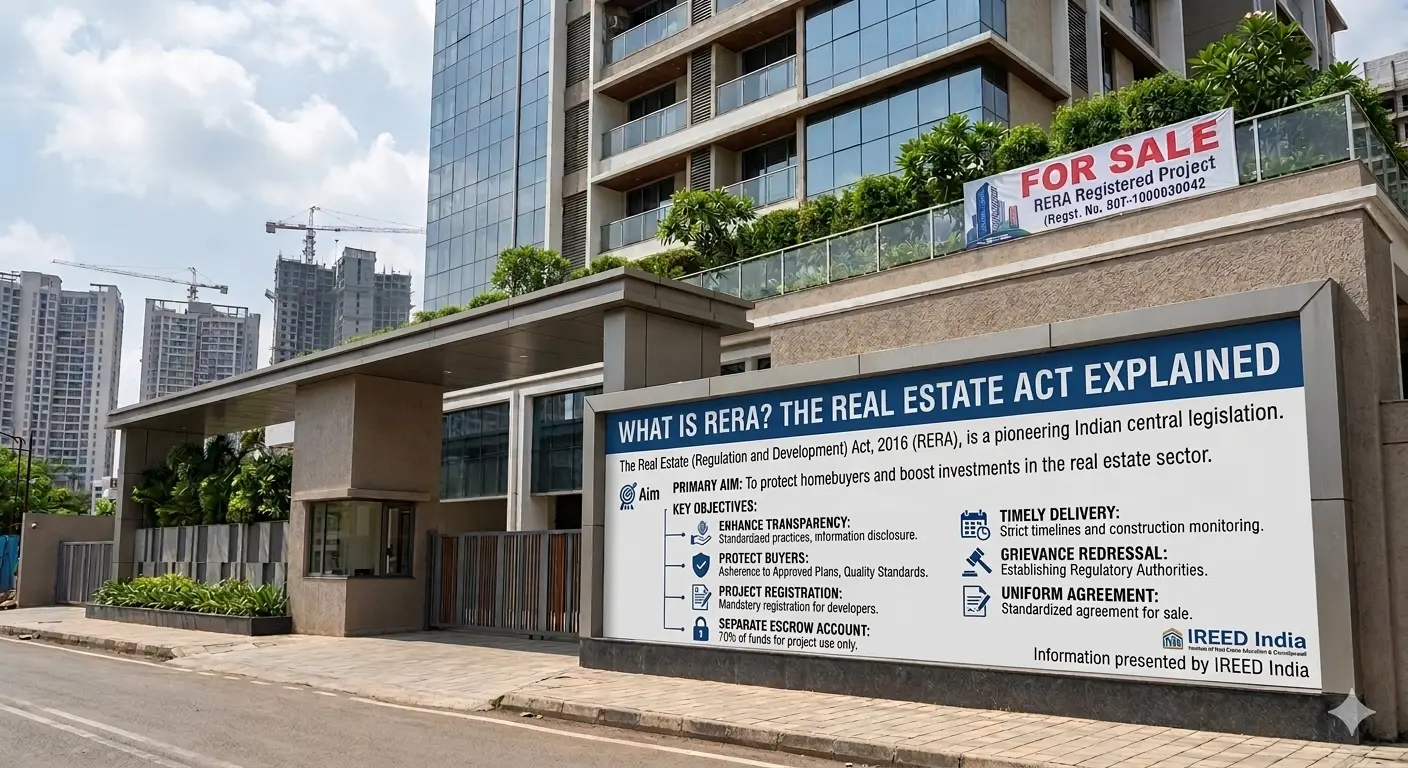
Buying a home is rarely just a transaction. It’s a life decision that comes with timelines, family plans, loans, and a lot of trust placed in people you may have met only a few times. The challenge is that real estate is also a long-gestation product: you often pay today for something that may be delivered months or even years later. That time gap is where confusion enters; possession dates shift, “included” amenities become “proposed,” layout changes are explained as “minor,” and area terms like super built-up can mask what you actually get. Most buyers don’t struggle because they can’t understand real estate; they struggle because the information is not always presented in a verifiable, comparable way. That’s exactly why RERA matters.
This guide explains what RERA is, what the RERA Act tries to achieve, and what RERA registration actually means for projects and real estate agents. You’ll also learn how to verify a property before booking, how to interpret “RERA approved” type marketing safely, and what a credibility-first decision process looks like. Wherever sections become heavy (like checklists, red flags, and verification steps), you’ll see bullet points; used only when they improve clarity. If you’re also building a career in real estate, you’ll see why RERA knowledge is increasingly a professional advantage; and how iREED India’s training ecosystem can help you develop that credibility.
What Does RERA Mean?
RERA stands for Real Estate Regulatory Authority. In everyday usage, RERA refers to both:
The legal framework introduced through the Real Estate (Regulation and Development) Act, 2016, and
The state-level regulatory authority and portal created to implement that framework.
This state-level implementation is important. Real estate is not regulated through a single central portal only; each state has its own RERA authority, processes, and online portal. That means “RERA registration” and “RERA portal verification” always needs one extra detail: which state the project is in.
A simple way to remember RERA’s meaning in practice is this: RERA is designed to make real estate more verifiable. It doesn’t replace common sense and due diligence; but it improves your ability to check what’s real before you commit money.
Why RERA Was Introduced: The Real Problems It Targets
RERA was introduced to address issues that repeatedly hurt buyers and also damaged the reputation of the industry: inconsistent disclosures, unclear area measurement practices, marketing that outpaced approvals, timeline uncertainty, and weak consumer grievance pathways. The goal wasn’t to make developers “the enemy” or buyers “always right.” The goal was to create a more structured market where commitments are clearer, information is easier to access, and accountability is more systematic.
Think of RERA as a shift from “trust-me selling” to “show-me verification.” It aims to reduce information imbalance by encouraging project registration (where applicable), standardized disclosures, more disciplined handling of buyer funds (through dedicated account rules), and structured dispute redressal mechanisms.
To keep this grounded, here are the kinds of problems RERA tries to reduce:
Projects marketed aggressively without clear, verifiable project identity
Misleading or incomplete advertising claims and “pre-launch hype” confusion
Area measurement ambiguity (especially around usable space vs marketed space)
Weak accountability when possession timelines shift or specifications change
Limited consumer-friendly pathways to raise and resolve grievances
Even if you never read the Act end-to-end, understanding these “why” factors makes it easier to interpret how RERA is meant to function in real life.
RERA Act 2016: What It Covers (Practical Highlights)
The RERA Act is detailed, but most buyers and professionals benefit more from a practical mental model than legal memorization. The Act creates a framework around registration, disclosure, responsibilities, and grievance redressal, implemented through state authorities.
Here are the most useful, high-value highlights to know:
Project registration rules (for eligible projects): Projects meeting specific criteria are generally expected to be registered with the state RERA authority before being marketed/sold in certain ways.
Agent registration rules (state-dependent implementation): Many states require agents to register, which raises accountability in the intermediary layer.
Disclosure-based market behavior: The system encourages that key project information should be publicly available and consistent with marketing claims.
Standard definitions: Terms like carpet area are clearly defined, supporting more honest comparisons.
Financial discipline principles: A commonly referenced principle is that a significant portion of collections from allottees should be kept in a dedicated account and used for the project, reducing fund diversion risk.
Grievance redressal structure: Authorities and mechanisms exist to handle complaints and disputes in a more structured way than informal escalation.
The key takeaway is not “RERA is strict.” The key takeaway is: RERA encourages documentation, transparency, and accountability as normal operating standards.
What “RERA Registration” Means for Projects
When a project is “RERA registered,” it usually means the project has been registered with the relevant state RERA authority and has a registration number and public listing on the state portal. This registration identity becomes a reference point for verification.
For a buyer, project registration helps you replace vague claims with something you can cross-check. For example, if a brochure says “possession by X” or “amenities included,” you can treat the portal listing and official disclosures as a more stable anchor than purely sales conversation.
Here’s what project registration typically enables you to do more confidently:
Verify the project’s registration number and correct project identity
Confirm the promoter’s legal entity name tied to the project
Compare projects using more consistent, standardized information
Reduce risk from misleading marketing by checking claims against disclosed details
Make stronger decisions earlier; before paying a token or signing forms
A crucial point: RERA registration is a strong filter, not a guarantee. A registered project can still face execution challenges. Your job as a buyer is to use registration as a starting point for verification, not as a substitute for evaluation.
RERA Registration for Real Estate Agents: Why It Matters?
Real estate agents and intermediaries have enormous influence over buyer decisions; especially early in the journey, when buyers are unsure what to trust. That’s why agent registration and compliance expectations under RERA are important in many states. It pushes the intermediary layer toward clearer accountability and more responsible representation.
From a buyer’s perspective, a RERA-aware agent usually:
Shares registration numbers instead of avoiding them
Guides you to verify on portals instead of relying only on brochures
Explains area definitions and pricing clearly
Sets realistic expectations on timelines and deliverables
Documents commitments properly to reduce disputes later
From a professional perspective, RERA knowledge is becoming a career differentiator. As buyers become more verification-driven, professionals who can explain compliance and documentation basics with confidence tend to win more trust and long-term referrals.
This is where structured learning matters. iREED India’s training ecosystem is relevant because it helps professionals build credibility-first skills; so you’re not just “selling,” you’re guiding clients through fact-based decisions.
Carpet Area Under RERA: Why Buyers Should Pay Attention
Area is one of the easiest places for confusion to hide. Many buyers compare properties using headline numbers (often super built-up area) without fully understanding what portion is actually usable. RERA’s focus on carpet area supports clearer comparisons because carpet area is closer to what you can physically use inside the apartment.
You don’t need to be an architect to use this well. You need a repeatable approach: always ask for carpet area and compare on that basis.
When you’re evaluating two projects, a credibility-first comparison should include:
Carpet area and layout efficiency (not just “bigger number”)
Specification quality and finishing commitments
Location fundamentals and future infrastructure signals
Legal/document readiness and clarity of approvals
Construction progress and realistic timeline behavior
Total cost clarity (base + charges + recurring costs)
If the conversation keeps circling back to glossy language but avoids clear area definitions, that’s not “normal sales.” That’s a signal to slow down and verify.
The “70% Separate Account” Concept: What It Tries to Achieve
One of the widely discussed discipline measures associated with RERA is that a significant share of funds collected from allottees should be deposited into a dedicated account and used for specific project-related costs. The purpose is to reduce diversion of buyer funds to unrelated projects and improve execution reliability.
For buyers, the key value is indirect. You won’t manage that account, but you benefit from what the principle promotes:
Better financial discipline tied to the specific project
Reduced likelihood of cashflow chaos caused by diversion
Stronger accountability signals for project execution
This doesn’t mean every delay disappears. It means the system tries to reduce one common cause of project distress: mismanagement of buyer-collected funds across projects.
How to Verify a RERA Claim Before Booking?
The smartest time to use RERA is before you pay, not after you’re emotionally attached to a unit. Verification doesn’t need to be complicated. It needs to be consistent.
Here’s a simple, buyer-friendly verification flow:
Ask for the RERA registration number early (don’t wait until booking day).
Find the project on the state RERA portal using the registration number, promoter name, or project name.
Match portal details with marketing claims (timeline, project name, promoter entity, key deliverables).
Confirm carpet area and pricing basis so comparisons stay honest.
Keep written records of commitments you care about (possession, inclusions, layout/specifications).
If you want a quick set of questions to carry into a site visit, use these:
What is the project’s RERA registration number, and which portal can I verify it on?
What is the carpet area and how is the price being calculated?
What is the committed possession timeline, and where is it documented?
Which amenities are guaranteed deliverables vs conceptual proposals?
Who is the legal promoter entity accountable for delivery and communication?
These questions don’t create friction; they create clarity. Good professionals usually respect buyers who verify.
“RERA Approved” vs “RERA Registered”: How to Interpret Marketing Safely
Marketing language can sound reassuring while still being vague. “RERA approved” is a common phrase used loosely. A safer approach is to treat such phrases as incomplete until they’re backed by verification.
Here’s a practical interpretation guide:
“RERA registered” → Ask for the registration number; verify on the portal.
“RERA compliant” → Ask: compliant with what details, and what can I verify today?
“RERA applied / under process” → Ask what is currently documented and what timeline is expected for registration.
“Don’t worry, it’s under RERA” → Respond calmly: “Great; please share the registration details.”
You’re not being difficult. You’re doing the minimum standard of due diligence for a high-value purchase.
Roles Under RERA: Promoter, Agent, and Buyer
Many disputes become messy because responsibility gets blurred. RERA’s role-based structure matters because it encourages clearer accountability.
A practical way to understand roles:
Promoter (developer/builder): Responsible for project execution, disclosures, and delivery commitments tied to the promoter entity.
Agent (intermediary): Responsible for responsible representation; should guide clients to verification and accurate information.
Allottee (buyer): Responsible for due diligence, timely payments as per agreed terms, and documentation discipline.
If each role performs responsibly, the buying journey becomes smoother. If any role treats commitments casually, confusion grows; and that’s when disputes escalate.
Complaints and Redressal: What RERA Changes for Buyers
RERA provides a structured environment for grievance redressal through state authorities and related mechanisms. While the exact process varies by state, the larger benefit is that buyers have a formal route beyond informal follow-ups and endless escalation loops.
However, the most effective way to “use” the system is to reduce your risk of needing it. The best buyer habits are preventive:
Preserve payment receipts and key written communications
Avoid relying purely on verbal assurances
Ask for clarity on deliverables and timeline commitments early
Keep document versions (floor plan versions, specification sheets) where relevant
Verify before paying larger amounts, not after
Even if you never file a complaint, these habits improve your decision quality and reduce stress.
Why RERA Knowledge Helps Professionals (Not Just Buyers)?
Real estate is becoming more verification-driven. Buyers compare online, ask sharper questions, and expect professionals to explain processes clearly. This shifts what “good performance” looks like in real estate careers. It’s no longer only about persuasion; it’s about credibility and clarity.
Professionals with strong RERA understanding typically:
Handle buyer questions with confidence rather than deflection
Reduce mis-selling risk and dispute frequency
Build trust faster, improving referrals and repeat business
Communicate timelines, area, and deliverables more responsibly
Align marketing and selling with documented realities
This is exactly where iREED India’s ecosystem becomes relevant: structured learning helps professionals convert information into repeatable client-handling skills; so your professionalism is consistent, not accidental.
Why Choose iREED India for RERA-Ready Learning?
If you’re a buyer, RERA knowledge protects your money. If you’re a professional, RERA knowledge protects your reputation and career longevity. iREED India focuses on practical real estate learning that builds confidence in the areas that matter most: verification habits, documentation awareness, compliance sensitivity, and credible client communication.
A strong professional doesn’t overwhelm clients with legal jargon. They simplify decisions through clear process guidance. That ability is built through structured exposure, practice, and the right learning environment; especially for professionals entering the industry or upgrading their skills for higher-trust roles.
Conclusion
RERA is best understood as a verification framework for real estate. It aims to improve transparency through registration and disclosures, clarify essential definitions like carpet area, encourage financial discipline principles, strengthen accountability across promoters and agents, and provide structured grievance redressal pathways. But the real value of RERA depends on how you use it: verify early, document what matters, and compare based on facts rather than pressure.
If you’re buying, make portal verification and carpet-area clarity part of your default checklist. Ask for registration details early, match marketing claims with disclosed information, and keep written records of commitments you care about. If you’re a professional, treat RERA literacy as credibility capital. The market increasingly rewards professionals who can explain, verify, and guide; because clients don’t just want a unit; they want confidence. With the right habits (and the right training support), RERA becomes not just a regulation you hear in ads, but a real advantage in how you buy, sell, and build long-term trust in real estate.