




.jpg.jpeg)
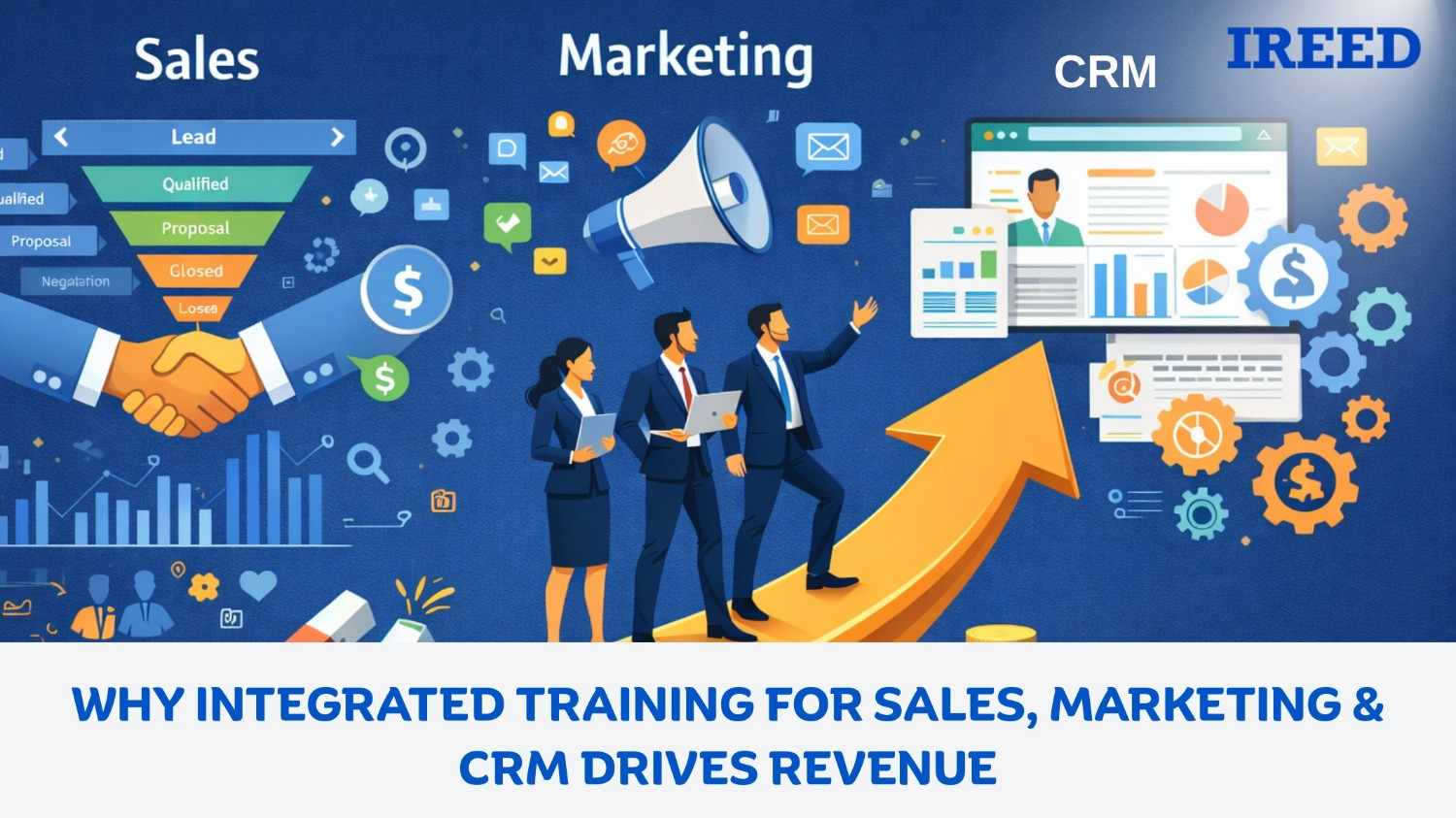
This is why Sales, Marketing, and CRM training is no longer an option, but it is a must for generating revenue. When the three functions are trained together, organizations are no longer driven by activities to grow and are driven by systems to generate revenues.
Read More: Role of CRM in Real Estate Lead Management
Revenue is the System and not a Department
Organizations are not experienced in silo by customers. On their part, marketing messages, sales conversations and follow-ups constitute one journey. In cases where internal training is conducted individually:
Leads who are created by marketing cannot be transformed into sales.
Sales ignores CRM insights
CRM is more of a report engine rather than a revenue engine.
Integrated training will make sure that each of the functions not only knows about its targets but also realizes that there is a common revenue system in place.
Marketing Without Selling Alignment Wastes Demand
In the current world, marketing teams are creating leads via content, advertisements, search engine optimization and events. But without integration:
The definitions of lead quality vary.
Messaging is not comparable to sales conversations.
Sales do not use campaign insights.
Combined training enables marketing departments to learn:
What a Sales-Ready lead really looks like.
The qualification and conversion of prospects by sales.
Which messages perform at what funnel stage?
This orientation enhances the quality of leads and minimizes friction as well as maximizing downstream conversion- revenue is positively affected.
Without an Insightful Marketing Sales Lose Ground
Sales forces are in the habit of making uninformed entries to conversations:
What campaign drew the prospect?
Previously consumed content of the buyer.
What are the pain points in marketing messages pointed out?
It is through integrated training that sales teams learn to:
Smart use of marketing information.
Personalize conversations
Keep on the story, rather than beginning again.
When sales generate momentum on marketing instead of neglecting it, the increase in conversion rates and deal velocity is significantly higher. The purpose of CRM systems is to bridge the gap between sales and marketing but unless they are trained, they get underutilized. Common problems include: Incomplete data entry Poor handoffs between teams CRM is applied as a reporting tool but not as a decision-making tool. Integrated training tends to guarantee that: Marketing realizes the impact of CRM information in targeting. Sales knows about the enhancement of conversation through CRM. Both teams rely on and have confidence in common information. This transforms CRM into a database that is not active but a revenue intelligence. With the training of teams together it is known: Where leads drop off Why prospects stall What are the areas where the stages should be improved? This mutual visibility facilitates: Faster course correction Better forecasting Evidence-based strategy modifications. Revenue is not improved due to the efforts of the teams, but due to the ability of the teams to work smarter and in unity. Misalignment often leads to: Selling more than sales can achieve. Contravenient sales positioning. Bafflement and indecisiveness of customers. Integrated training aligns: Value propositions Pricing narratives Objection-handling language Consistency builds trust. Confidence reduces the time to make decisions. Reduced cycles enhance the predictability of revenues. Conversion is not the end of the revenue growth. Continuity is needed in retention, upsell and referrals. Integrated training does guarantee: Fluid marketing to sales transitions. Smooth post-sale follow-ups. Relationship management based on CRM. Customers put loyalty when they feel heard in all their engagements - and lifetime value. In siloed systems, the revenue is commonly reliant on a small number of high performers. Integrated training: Makes success repeatable Documents best practices Less reliance on personal memory or style. This will enable organizations to scale revenue without compromising quality and control. Contemporary growth organizations are trending towards Revenue Operations, given that sales, marketing, and CRM will become a single unit. This model aims to be based on integrated training as it: Matches rewards and indicators. Enhances interdepartmental cooperation. Allows making decisions based on data. Revenue is no longer a gamble but a process that is to be managed. In case of a lack of training of sales, marketing and CRM, the organizations lose by: Lower conversion rates Longer sales cycles Poor forecasting accuracy Customer churn The losses are slow and sometimes insidious, yet very destructive in the long run. There is no longer a need to focus on individual excellence to generate revenue--it is integration. The sales skills, marketing strategy, and CRM technology need to be a private, trained ecosystem. Integrated training harmonizes individuals, procedure and information. It leads to a conversation, conversations to conversions and conversions to long-term relationships. In the current competitive markets, organizations do not lose revenue due to a lack of tools; they lose revenue due to a failure to make a connection. The way such connections are developed is through integrated training--and how revenue actually grows.CRM Is the Bridge but Only with Team Training
Integrated Training Increases Funnel Visibility
Regular Messaging Gains Buyer Confidence
The Higher the Customer Experience, the Higher the Lifetime Value
Shorter Turnaround, Reduced Reliance on People
Training Integrated to Benefit Revenue Operations (RevOps)
The Price of Disintegration Is Intangible-but Costly
Conclusion: