




.jpg.jpeg)

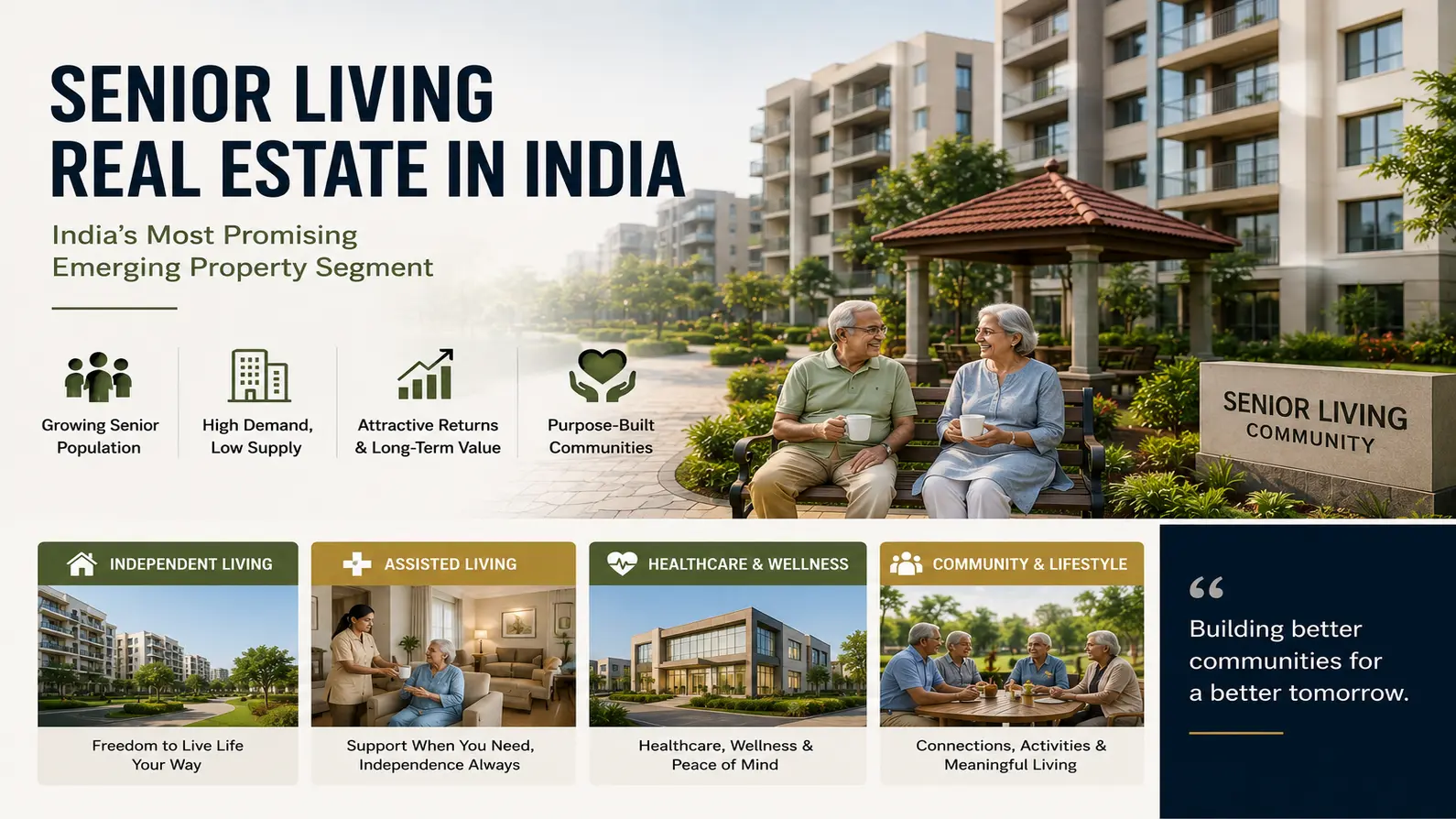
Senior living real estate is India's most underpenetrated, most demographically inevitable, and most rapidly institutionalising property segment of 2026. India's senior population — currently estimated at 156–162 million — is projected to more than double to 346 million by 2050, creating a structural demand for nearly 2.3 million senior living units by 2030. Yet today, organised senior living supply in India numbers fewer than 25,000 units — a supply gap so vast that senior housing is being called the most compelling real estate opportunity that most investors have not yet discovered. What was once viewed as a niche or socially driven segment is steadily evolving into a significant component of India's urban real estate landscape — attracting institutional developers including Ashiana Housing, Brigade Group, Tata Housing, and Max Group, drawing growing NRI interest as a solution for ageing parents in India, and offering investors predictable absorption patterns and recurring income models that compare favourably with co-living and student housing at their early stages. This complete 2026 guide covers India's senior living real estate market — the demand drivers, the product types, the top developers, the investment case, and the career opportunities it is creating for forward-thinking real estate professionals. 156M+ Current senior population India 346M Projected seniors by 2050 2.3M Units needed by 2030 25,000 Organised units available today Senior living real estate refers to purpose-built residential communities and housing complexes designed specifically for elderly residents aged 55 and above — offering a combination of specialised architecture, healthcare support, wellness services, community programming, and emergency response systems within a managed residential environment. Senior living is distinct from conventional housing in that it integrates lifestyle, healthcare, and community support services directly into the living experience — addressing the unique physical, social, and psychological needs of India's ageing population. In India, senior living communities range from independent lifestyle communities for active seniors to assisted living facilities for those needing day-to-day support and memory care or skilled nursing facilities for those requiring medical attention. The segment is gaining rapid traction as India's first generation of truly affluent, health-conscious, and socially independent seniors seeks housing that matches their lifestyle aspirations — not just their medical needs. India is entering a decisive demographic phase. The country's senior population is projected to more than double from 156–162 million today to 346 million by 2050 — making India one of the world's largest senior populations within a single generation. Unlike cyclical demand drivers, demographic momentum is structural and irreversible — making senior living one of the most durable demand stories in Indian real estate. Industry estimates confirm that India will require nearly 2.3 million senior living units by 2030 — against an organised supply of fewer than 25,000 today. India's rapid urbanisation and the migration of younger generations to metro cities for employment has accelerated the breakdown of the traditional joint family system — leaving elderly parents in smaller cities or suburban homes without daily family support. This structural social shift is creating strong demand for senior living communities that provide the safety, social connection, healthcare access, and active lifestyle programming that family proximity once provided. NRIs are increasingly driving this demand — viewing senior living communities as the ideal solution for ageing parents in India. Today's Indian seniors — those in their 60s and 70s in 2026 — are the wealthiest, best-educated, and most financially independent generation of Indian elderly in history. Many own substantial assets, have pension income or rental returns, and have children abroad sending remittances. This economic reality is laying the foundation for what industry participants increasingly call the "silver economy" — a broad-based growth opportunity spanning real estate, healthcare, financial planning, and lifestyle infrastructure. These seniors demand quality, not just care. NRIs are showing growing interest in senior living projects, particularly in hubs like Kerala, Delhi NCR, Bengaluru, and Hyderabad — viewing them as safe, community-driven options for ageing parents. For NRIs living in the USA, UK, or Gulf, a professionally managed, medically equipped senior living community in India offers the perfect solution for parents who want to remain in India but need support that their children cannot physically provide. This NRI demand segment is driving premium senior living development in cities with large NRI populations. Alternative asset classes such as data centers, senior living, and co-living are poised for sustained momentum as investors seek diversification and enhanced risk-adjusted returns. Senior housing is beginning to resemble the trajectory of co-living and student housing seen a decade ago — and institutional investors are recognising the untapped potential, with capital allocation towards senior living expected to rise significantly through 2026 and 2027. Brigade Group's strategic partnership with Primus Senior Living and Ashiana Housing's established retirement community portfolio are benchmarks for this institutionalisation. Independent Living - Active seniors living independently in age-friendly apartments with community amenities, social programmes, and optional services. Entry: ₹50L–₹3Cr+ Assisted Living - Day-to-day support for seniors needing help with daily activities — meals, housekeeping, medication management. Entry: ₹60L–₹2Cr+ Continuing Care - Integrated communities offering independent + assisted + memory care — allowing seniors to age in place as needs evolve. Premium segment Wellness Communities - Premium communities focused on active ageing — yoga, fitness, wellness centres, preventive healthcare. Growing fastest in 2026 NRI-Focused Retirement - Premium gated communities for returning NRIs and NRI parents — international standards, healthcare, security. Kerala and Bengaluru leading Affordable Senior Housing - Government-linked and mid-market senior housing for middle-income retirees. PMAY and state schemes supporting. Large unmet demand Investment signal: Senior housing is beginning to resemble the trajectory of co-living and student housing seen a decade ago — offering predictable absorption patterns and recurring income models that appeal to investors seeking defensive real estate strategies with demographic tailwinds that are irreversible. Read also: NRI Real Estate Investment in India 2026 — NRIs are the fastest-growing buyer segment for senior living communities for ageing parents. Entry price range: ₹50 lakh to ₹3 crore+ depending on city, developer, and community type Monthly maintenance: ₹15,000–₹80,000 per month depending on services included Rental yield (managed communities): 6–9% for investors in managed rental senior living communities Capital appreciation: 8–12% annually in premium corridors — driven by scarcity of organised supply Lease model: Many senior living communities operate on long-term lease models (99-year leases) rather than outright sale Resale market: Still developing — limited secondary market but improving with institutional entry Pune — India's senior living capital — largest organised supply, pleasant climate, strong healthcare infrastructure Bengaluru — Fast-growing premium senior living market; NRI and IT sector retirement demand Kerala — Strong NRI demand for parents; culturally appropriate communities; best quality healthcare Hyderabad — Emerging fast with pharma and IT sector senior demand; ₹400 crore Serene BILVANI pipeline Delhi NCR — Large affluent senior population; premium communities in Gurugram and Noida Dehradun — Ultra-premium retirement destination; clean air, natural setting; Max Antara flagship Chennai — Strong South India healthcare infrastructure; growing institutional senior living supply Read also: Green Building in India 2026 — senior living communities are leading adopters of green and wellness design certifications in Indian real estate. "Senior living is India's most compelling real estate story that most investors have not yet discovered. The demographic math is irrefutable, the supply gap is enormous, and the product is evolving rapidly from basic elderly care to premium lifestyle communities that India's most affluent seniors genuinely want to live in. The window before institutional capital fully arrives is narrow — and closing fast." Want to build expertise in India's fastest-emerging real estate segment? IREED India comprehensive real estate curriculum covers alternative housing segments, investment analysis, and the property market knowledge to advise clients across every category. Senior living real estate in India in 2026 sits at the intersection of irreversible demographic momentum, massive supply shortage, rising affluence among India's elderly population, and growing institutional validation — making it one of the most compelling real estate investment and career opportunities available to forward-thinking property professionals today. With 2.3 million units needed by 2030 against fewer than 25,000 organised units today, the demand-supply gap makes senior living arguably the most underpenetrated segment of Indian real estate — and the one with the longest runway for growth. For real estate professionals who understand this segment — its unique product requirements, its buyer psychology, its investment structures, and its healthcare-real estate convergence — senior living offers a high-income, differentiated advisory niche that is still wide open in 2026. IREED India prepares professionals to serve every segment of India's evolving residential real estate market — from conventional apartments to alternative formats like senior living, co-living, and student housing. Senior living real estate India 2026 — quick reference: Senior population: 156–162 million today → 346 million by 2050 Units needed: 2.3 million by 2030 Organised supply: Fewer than 25,000 units — massive gap Drivers: Demographics, nuclear family shift, silver economy, NRI demand Types: Independent, assisted, wellness, NRI-focused, continuing care Top developers: Ashiana, Paranjape, Brigade, Tata, Max Antara, Columbia Pacific Best cities: Pune, Bengaluru, Kerala, Hyderabad, Delhi NCR, Dehradun Investment yield: 6–9% managed rental; 8–12% capital appreciation Investor signal: Trajectory resembles co-living a decade agoWhat is senior living real estate?
Why senior living is India's most compelling real estate opportunity in 2026
Driver 01 - Demographic Inevitability - India is Ageing Rapidly
Driver 02 - Nuclear Family Shift - Traditional Support Systems Breaking Down
Driver 03 - The "Silver Economy" - India's Wealthiest Generation of Seniors
Driver 04 - NRI Interest - Senior Living for Parents Back Home
Driver 05 - Institutional Investment Arrival - Validation of the Segment
Types of senior living communities in India 2026
Top senior living developers in India 2026
Senior living investment — key metrics 2026
Top cities for senior living investment in India 2026
Conclusion


Trending Topics
REAL ESTATETRENDINGPOLITICSTECHNOLOGYBUSINESSHEALTH
IREED Associate Aug 26, 2026
Frequently Asked Questions
📊 Popular Reads
Loading items...